Chhath Puja is one of the most sacred and traditional Hindu festivals celebrated with great devotion, particularly in Bihar, Jharkhand, Uttar Pradesh, and several other parts of India. This festival is dedicated to Lord Surya (the Sun God) and Chhathi Maiya. Devotees observe Chhath Puja to express gratitude to the Sun God for providing life, energy, prosperity, and good health.
Chhath Puja is known for its strict fasting rituals, devotion, cleanliness, and prayers offered to the setting and rising Sun. Unlike many other Hindu festivals, Chhath Puja does not involve elaborate idol worship. Instead, devotees worship the Sun directly and perform rituals near rivers, ponds, and other water bodies.
Chhath Puja holds immense spiritual and religious significance in Hindu culture. Lord Surya is considered the source of life and energy on Earth. Worshipping the Sun God is believed to bring happiness, prosperity, good health, and positive energy into the family.
Chhathi Maiya is also worshipped during this festival and is traditionally associated with the protection and well-being of children and family members. Devotees pray for the long life of their children, family prosperity, and the fulfilment of their wishes.
From an astrological perspective, the Sun represents confidence, leadership, authority, vitality, and self-esteem. Therefore, the worship of Surya Dev also holds importance in Vedic astrology.
Chhath Puja is traditionally celebrated over four days. Each day has a special religious significance and specific rituals.
The first day of Chhath Puja is known as Nahay Khay. On this day, devotees take a holy bath, clean their homes, and prepare traditional food using pure ingredients. The food is generally prepared without onion and garlic. This day marks the beginning of the festival and encourages physical and spiritual purification.
The second day is called Kharna. Devotees observe a fast throughout the day and break it after sunset by offering prayers. Traditional prasad, such as jaggery kheer, chapati, and fruits, is prepared and distributed among family members and devotees.
After Kharna, devotees begin a strict 36-hour waterless fast, which continues until the morning Arghya.
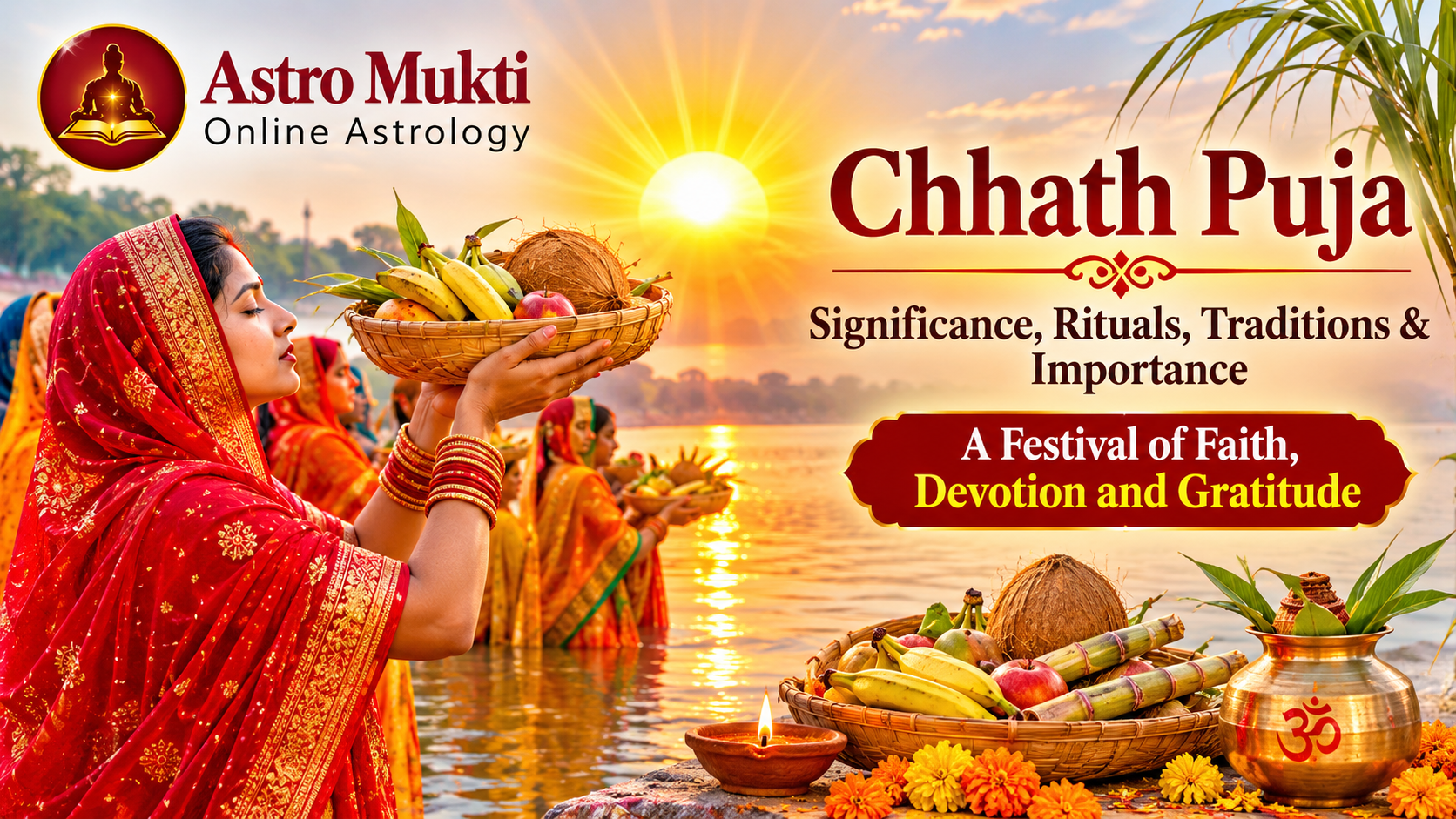
The third day is one of the most important days of Chhath Puja. Devotees gather near rivers, ponds, and other water bodies to offer Arghya to the setting Sun.
The offerings generally include fruits, sugarcane, thekua, coconut, and other traditional prasad arranged in bamboo baskets. Devotees stand in water and offer prayers to Surya Dev while singing traditional Chhath songs.
The fourth and final day is known as Usha Arghya. Devotees gather early in the morning to offer prayers and Arghya to the rising Sun.
This ritual represents gratitude, hope, positivity, and new beginnings. After offering Arghya, devotees complete their fast by performing Parana and distributing prasad among family members, relatives, and neighbours.
In Hinduism, Lord Surya is considered one of the most powerful deities and the visible source of energy and life. Without sunlight, life on Earth would not be possible.
Worshipping Surya Dev during Chhath Puja symbolizes gratitude towards nature and the universal energy that sustains all living beings.
According to Vedic astrology, the Sun is also associated with the soul, father, government, reputation, career, and leadership qualities. A strong Sun in a birth chart is traditionally associated with confidence, authority, and determination.
Devotees follow several traditional practices to maintain the purity and spiritual importance of Chhath Puja.
Maintain cleanliness in the home and the place of worship.
Prepare prasad using traditional ingredients and clean utensils.
Follow fasting practices according to personal health and family traditions.
Offer Arghya to both the setting and rising Sun.
Distribute Chhath prasad among family members and others.
Maintain devotion, discipline, and a positive mindset throughout the festival.
Fasting practices can be physically demanding, so individuals should consider their health and seek medical advice when necessary.
Chhath Puja is more than a religious festival; it is a celebration of faith, devotion, nature, family, and gratitude. The four-day celebration teaches people the importance of discipline, purity, patience, and respect for the natural world.
Whether it is offering Arghya to the setting Sun or welcoming the rising Sun with prayers, every ritual of Chhath Puja carries a deep spiritual message.
On this auspicious occasion, Astro Mukti wishes everyone a very Happy Chhath Puja. May Surya Dev and Chhathi Maiya bless you and your family with good health, happiness, prosperity, and success.
For more information about astrology, planetary positions, zodiac signs, and Vedic astrology, visit Astro Mukti and explore spiritual insights to understand the influence of planets in your life.